MCO- 425
The debate over book bans has surpassed singular school board disputes to national conversation in the United States, discussing freespeech and censorship. Additionally, the topic of debate lies within who gets to decide what our students are reading. The issue of book bans has narrowed tremendous attention onto parents, authors, educators and advocates of free-speech. Ultimately, outlining intense cultural contrasts between history, the role of public education, and identity.
What Are Book Bans?
Historically, book banning refers to the restriction or removal of access to books, typically in classrooms and school libraries, due to objectionable content. This includes restriction of access by parental permission or grade level, moving books to less accessible spaces, or the physical removal of books from spaces. Book bans are controversial as it directly intrudes on freedom of expression, which is an essential to democracy.
Censorship has prevailed for centuries, going as far back as Imperial China destroying content to the Catholic Church’s Index Librorum Prohibitorum, forbidden books from 1560 to 1966. This highlights the long withstanding tool that book banning has become to control ideas.
Book bans are constitutionally not government bans in U.S. public schools, rather a systemic removal conducted by state laws, school districts, or education officials. However, these types of actions can be argued that they indeed reflect political priorities.
The current wave of book bans has accelerated in the early 2020s, despite controversial works having been included in literature for centuries. Recently, conservative legislators and activist groups have urged for these bans on what they deem as “inappropriate” content, specifically with sexual and LGBTQ+ themes. Books that center on gender identity, history, and race have also been affected, initiating protests from free-speech advocates that believe diverse perspectives should be a provided access in schools. For example, Margaret Atwood’s novel Oryx and Crake.
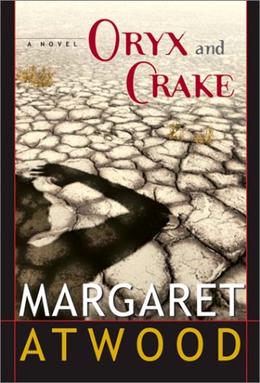
Many novels, approximately thousands, have been restricted or banned across various states in the U.S. with Texas, Florida, and Tennessee leading the number.
While ignoring the larger educational value of certain books, there have been selective decision-making on the content being framed as “inappropriate” that form predetermined views to support decisions on what is restricted. This tactic is referred to as card stacking. Additionally, tactics like glittering generalities are also utilized by campaigners and politician to forward emotionally loaded terms that aid restrictive policies. For example, family values is one often noted, discrediting the educational servitude of certain books. Propaganda devices like rhetoric and selecetive fact presentation are shaped to influence public opinion instead of informing it, highlighting how controversial public issues can turn into spaces of ideological persuasion.
While the issue of book banning remains unresolved, the counter to oppose censorship is increasing. Many advocators such as parents, educators, and civil liberty groups have organized efforts to protect intellectual freedom for students. While these efforts have grown exponentially, book banning advocates champion the decentralized essence of United States education policies, surrendering decisions to school boards.
Book bans are conclusively about who shapes our knowledge, culture, and moral/social norms in a democratic state. Examining how book bans are framed, justified, and opposed, we are exposed to the strength of public discourse and the power of propaganda in reference to free expression. Book bans remain a prevalent issue that outline a wider reflection of education, freedom, and identity in America.
 gabrielle all the time
Leave a comment